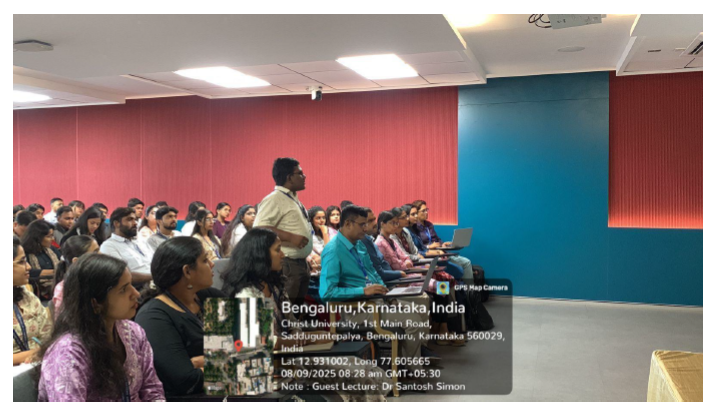
The session began with an interactive question, “Have you heard about speech and language?”, which helped engage participants and set the context for understanding communicative disorders and their components. The speaker explained that communication is not limited to speech alone but also includes non-verbal elements such as gestures, facial expressions, and emojis. He highlighted how the same symbol or expression can convey different meanings across cultures and languages, reflecting the diversity inherent in communication. To illustrate this, the speaker shared a personal anecdote about asking for a “cover” in a supermarket abroad and how it was interpreted differently, demonstrating how cultural context influences meaning. He then outlined the four essential stages of the communication process: formulating, transmitting, receiving, and comprehending, and explained how breakdowns at any stage may result in communication difficulties.The session also addressed various communication disorders, including articulation problems, aphonia, and stammering, and discussed their impact on daily interactions and learning. The moving story of Nilanka, a girl with cerebral palsy, highlighted the transformative role of assistive technology in enabling self-expression despite physical limitations Read More